
May Notebook
Links, excerpts, and a few passing thoughts

Something that surprised me on my recent job search was how important tests and assessments were to the hiring process.
Across interviews with ~10 companies the process included:
Coding assessments
Computation and problem-solving modules
Case studies
Timed writing assignments
An hour-long presentation
A multi-week data project
Experientially at least, my degree didn’t feel like just “the passport to the real learning” or a signal of my underlying conscientiousness and conformity. Nor were they simply testing to see how smart I was. They wanted me to show what I had actually learned.
This is not what Bryan Caplan prepared me for!
Attention Caplanites: School is Less Wasteful Than You Think!

Bryan Caplan’s The Case Against Education has a lot of purchase in the blogosphere. If you haven’t heard of it, you should put down this post and go read his article in The Atlantic to see it at its condensed best. To this day, very few essays have influenced the way I perceive the world so much.
The Case for Link Posts
Daniel Frank argues we still need them,
A curated linkpost is one of the best ways for already-successful bloggers to generate positive externalities and contribute to the broader intellectual blogosphere, redirecting their attention to help the world discover great content and lesser-known writers.
A second reason I love linkposts: similar to a blogger sharing their Goodreads profile, a linkpost gives you a real sense of who a person is—how they think, what captivates them. Exposing their intellectual diet is a window into their mind that no single essay can quite replicate.
Frank’s first point is not the strongest reason for me to write a link post, though I do what I can. But the second is useful for pretty much anyone. Use the links you post to help readers connect with you on a deeper level.
Keep in mind that it’s not really about the links.
Why Does No One Click on Links?

Zvi Mowshowitz includes the following as one of his core lessons from a year of blogging on Substack,
Is Elon Stupid on Probability?


I’ll say at the outset that I’m not sure how much Elon does know or care about probabilities. At minimum he clearly thinks quoted odds don’t apply much to him.


(This may even be probabilistically defensible in a “Han is a badass” sort of way.)
But it is ok to suspect Silver’s probability was too high. When forecasts fluctuate this dramatically I personally find it hard to justify moving very far from a 50/50 base rate.
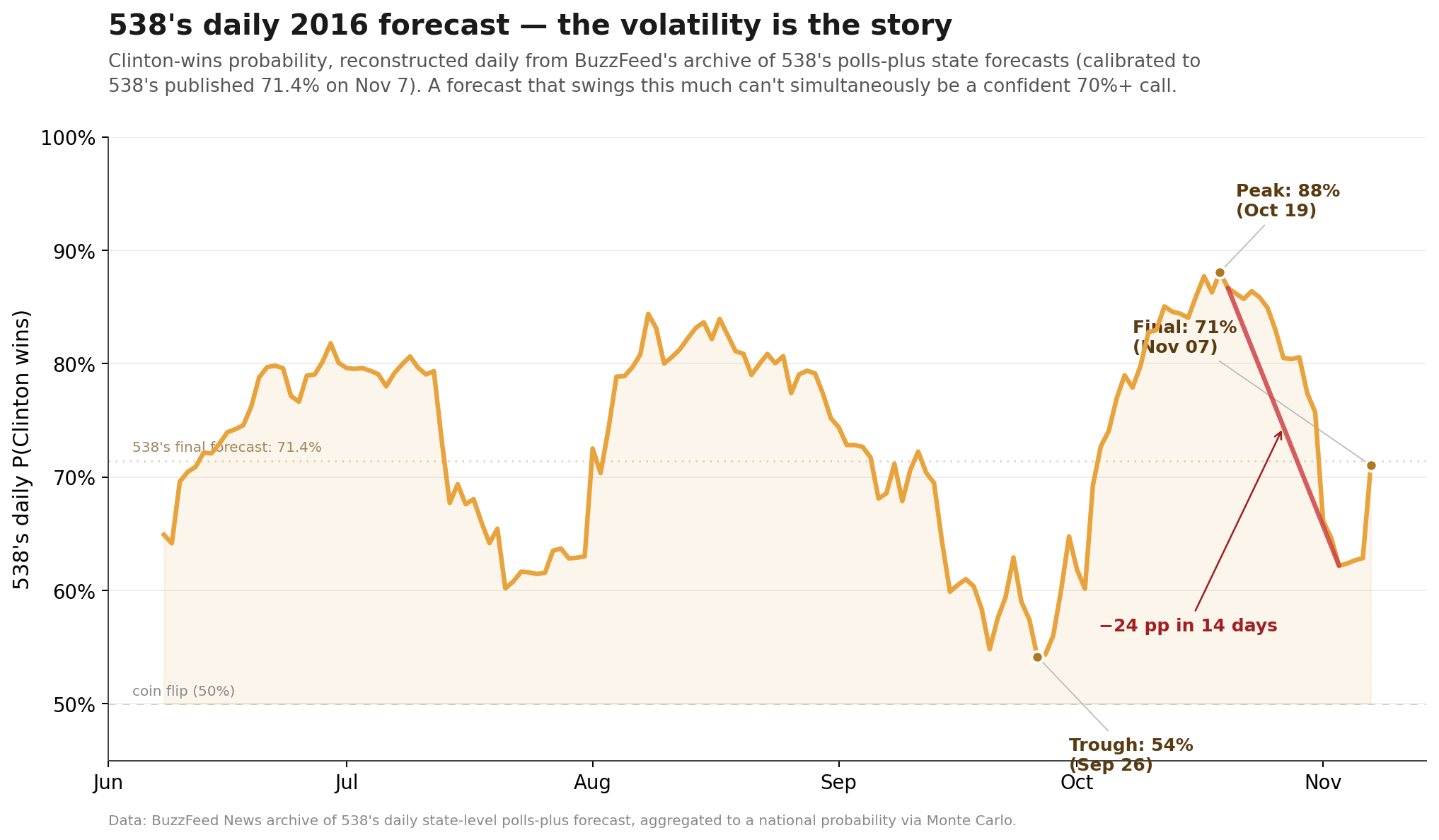
I’ve reflected on why people who are into politics react so negatively to this point, and I think it’s largely because saying the presidency is 50/50 takes most of the fun out of it.
A Footnote in the Gender Wars
The “gender revolution” of the last century is incomplete: despite tremendous advancement within the paid workforce, women’s incursions into employment outside the home have not been matched by men’s contributions within the home.*
This makes it sound as though women take on a higher total workload than men, which is not the case. In the most recent time diary data the genders contribute very similar amounts of labor to the household.
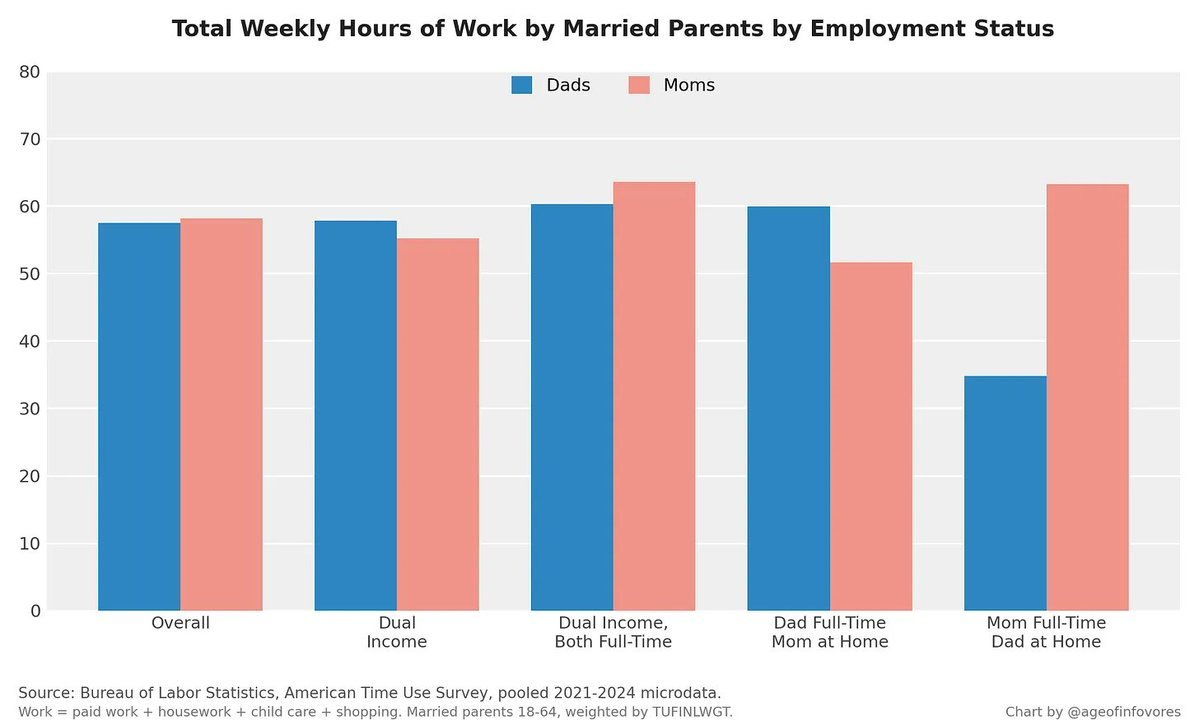
This fact receives no mention in the article, save for the asterisk * above, which leads to this footnote:
*This is well documented by time diary data, which finds that even when couples earn equivalent salaries, women do about five more hours a week of domestic work and men enjoy about three more hours of leisure. (Men do a few more hours of paid work a week in these couples, but the total paid + unpaid labor carried by women is still greater than that carried by men). Although those differences may sound minor, over the course of a year, women are devoting about six weeks worth of 40-hour workweeks to unpaid household work, and men are getting an extra month’s worth of 40-hour workweeks of leisure. Raw data show that married women do about 60-80% more of the total unpaid labor than married men, but you really need to adjust for income and work hours because men typically make more and work longer hours. After that adjustment, women are doing about 30-40% more of the unpaid household labor. The couples that get closest to a 50-50 division are actually female-breadwinner couples. In contrast, women do twice as much household labor when couples include a male breadwinner.
You would have to know already that the raw gap does not disfavor women or you would never make out that fact from the above.1
Other Things Worth Reading
1. “No, Having a Baby Is Not Like Becoming a Vampire” by Jack Hillier (FKA John Smith)
This essay on The Vampire Problem is engaging, sharp, and even a bit polemical. It was also allegedly written 100% by AI.
2. “The Hardest Part Of History To Tell Is How It Felt” by Craig Fehrman
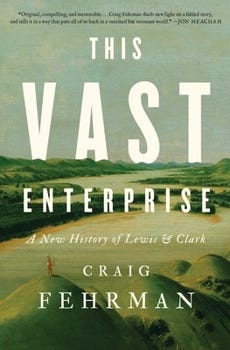
A life and death personal experience caused the author to reevaluate his approach to writing history,
Once I was ready to write again, I decided to revise my approach. Historians and nonfiction authors often glide over lived experience. They prefer actions, citations, details, dates. But I had just gone through something primal—something beyond my control and beyond the boundaries of modern life. Gliding no longer felt honest or accurate. I thought I needed to dig deeper, to consider the intensity, the uncertainty, and the violence that defined the expedition.
It’s a fantastic essay, with important insight. I’m not sure it improved the book.
3. “Get sexier” by Aria Schrecker of Works in Progress
I disagree with much of this article, but it was stimulating to think about why. Oddly it did lead me to positively revise my views of Utah, home of the highest plastic surgery rates in the nation and apocryphal Playboy-rated hottest campus.
4. “The Perfect Mode of Being” (podcast)
For all the ink that has spilled on the “What Happened to Jordan Peterson” genre, why not try listening to his answer?
5. Did Slavery Cause Modern Economic Growth? by Michael Magoon
Argues both the for and the against side of this question better than anything I’ve read.
6.


One reason I think government funded childcare and parental leave activism are counterproductive—they reinforce a narrative that depresses fertility.
7. “Men Can Have Standards Too” by Aaron M. Renn
A video clip from the Dave Ramsey show became a viral topic of debate on X. A woman who supposedly has $90,000 in student loan debt called in because her boyfriend says he won’t propose to her until she’s debt free.
Ramsey tells her, “If you were my daughter, you know what’s I’d tell you? Dump him.”
8. Is Elon quietly solving misinformation?


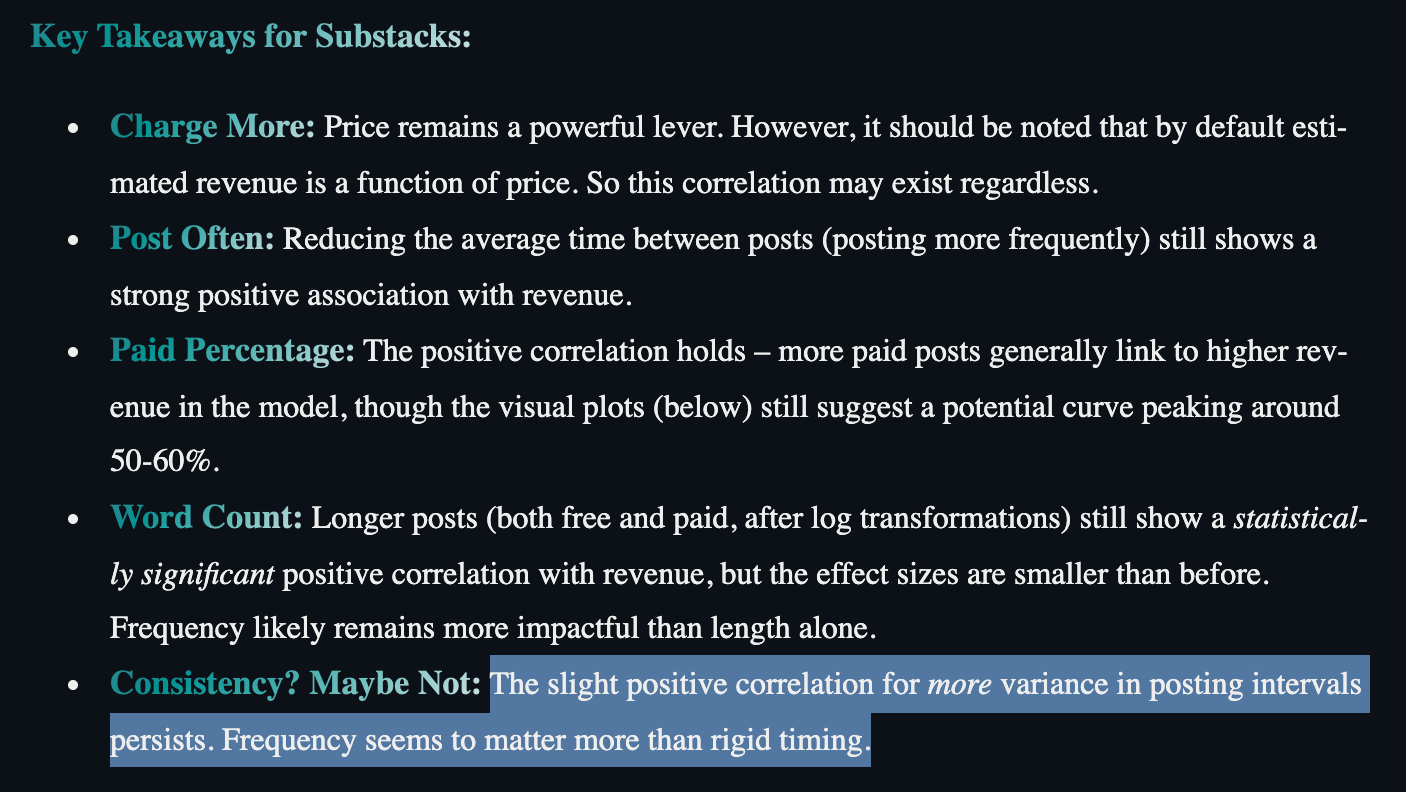
9. “I Web scraped 2 Million Substack Articles. This is What I Learnt.” by Uncorrelated
Volume still matters, consistency less so.
This is one reason l've become less bullish on the linkpost—they used to fill a need that is now largely obsolete. Where once you had to blog everyday to keep readers in the habit of visiting your webpage, newsletters simply insert your writing into the flow of the compulsive email checking everyone is already doing.
10. “For the love of God, learn to paragraph” by Hollis Robbins
Strong paragraphs are essential for making strong arguments, for lodging ideas in a reader’s memory. Paragraphs are bricks. Each one has to hold together internally and bear weight in relation to the ones around it. If you can’t remember something you just read, it was likely a motley pile. LLMs have difficulty generating coherent paragraphs for reasons I will explain below. LLMs will litter their prose with bold and italicized phrases, bullets, and one-sentence-per-line formatting to disguise weak paragraphs.
Some of the best writing instruction I’ve had. Am I too old to begin the training?

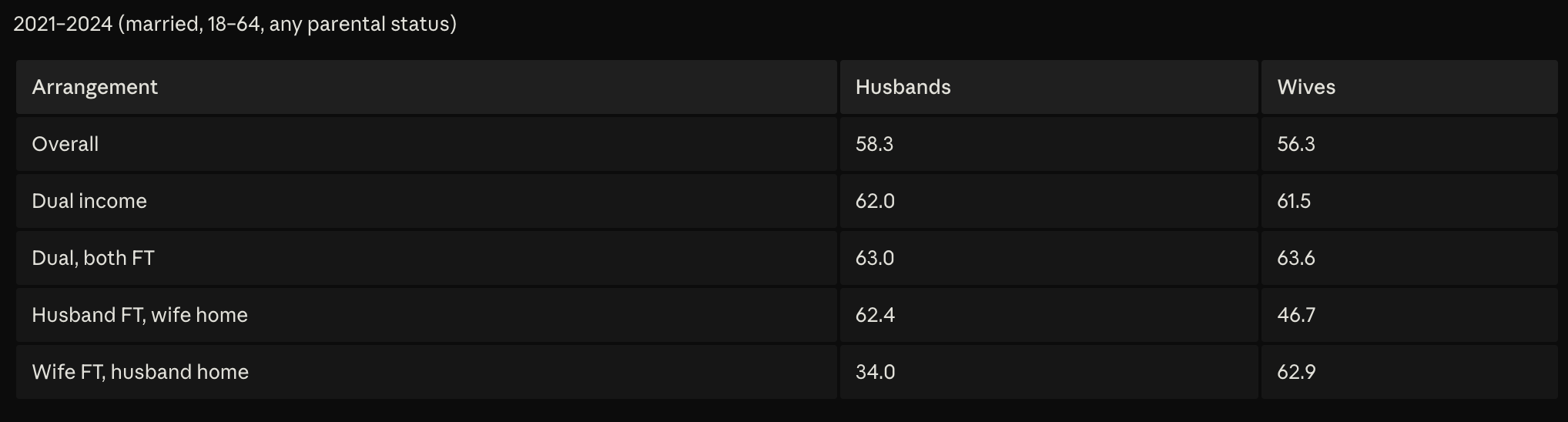
There is more that could be said on this topic. Historically men have actually worked more total hours than women across paid work, housework, childcare, and shopping.
As per this 2019 blog post that inspired the chart I made in the main text of this newsletter (HT Robert VerBruggen for that original analysis).
Note also that restricting to married parents actually gives the strongest case for unfair workload for women. Married spouses regardless of parental status still show men working more.
Love a good link post. It’s why I subscribe to In My Tribe
Do this every month!